A pair of deadly bombings in the capital cities of India and Pakistan has killed at least 20 people in less than 24 hours. These attacks represent the most significant security failures in New Delhi and Islamabad in more than a decade. The violence has sparked fears that it could lead to new conflict between the two nuclear-armed nations and threatens a fragile ceasefire.
The first attack was a car explosion that happened on Monday evening near the historic Red Fort in Delhi. According to police, this blast killed at least eight people and left 20 others injured. Just hours later, a suicide bomber targeted a district court in Islamabad on Tuesday afternoon. Pakistan’s Interior Minister, Mohsin Naqvi, confirmed that this attack killed 12 people and wounded another 27.
Investigations Point to Terrorist Connections
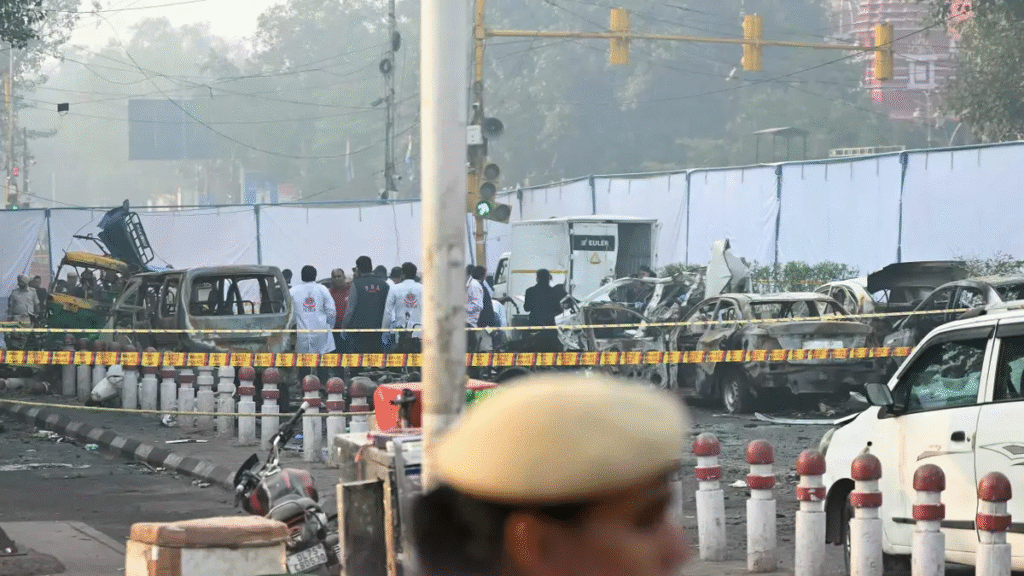
In response to the Delhi blast, Indian authorities have started an investigation using the country’s main anti-terrorism law, the Unlawful Activities (Prevention) Act. The National Investigation Agency has now taken charge of the case. The explosion happened shortly after police had arrested several people, including doctors, and confiscated 2,900 kg of explosives. These materials were linked to the militant group Jaish-e-Mohammed, which is based in Pakistan.
Police believe the explosion may have been a suicide attack that used a Hyundai i20 car filled with ammonium nitrate. However, investigators have not yet officially stated whether the blast was a deliberate act of terrorism.
In Pakistan, a group called Jamaat-ul-Ahrar, which is a splinter faction of the Pakistani Taliban, has claimed it was behind the courthouse bombing in Islamabad. The group stated that it was targeting judges, lawyers, and officials who make rulings based on what it calls Pakistan’s “un-Islamic laws.” The main Pakistani Taliban group, however, has denied that it was involved in the attack.
Accusations Fly Between the Two Nations
The bombings have quickly led to accusations between the two countries. Pakistani Prime Minister Shehbaz Sharif blamed “terrorist proxies backed by India” for the attack in Islamabad, though he did not offer any evidence to support his claim. India’s foreign ministry quickly rejected these allegations, calling them “baseless and unfounded.”
Pakistan’s Defense Minister, Khawaja Asif, declared that his country is now “in a state of war.” He warned that terrorism has reached the heart of the nation and accused the Taliban government in Afghanistan of letting militants use its territory to plan and launch attacks.
These two attacks come just six months after a ceasefire, which was arranged by the United States, ended four days of heavy fighting between India and Pakistan in May 2025. That conflict began after a militant attack in Indian-administered Kashmir killed 26 tourists. In response, India launched missile strikes into Pakistani territory in a mission called Operation Sindoor.
Following these latest explosions, security has been increased across both India and Pakistan. Indian authorities have put major cities, including Mumbai, on high alert. These violent incidents highlight how fragile the current ceasefire is and show the ongoing security threats that both countries face from militant groups active in the region.