In a major scientific achievement, researchers have created a “digital twin” of our planet with an incredible 1.25-kilometer resolution. Scientists at the Max Planck Institute for Meteorology have reached what many in their field call the “holy grail” by successfully combining weather forecasting and long-term climate modeling into a single, seamless simulation.
The details of this breakthrough were described in a paper submitted to the online archive arXiv on November 3. This work represents the first time a global simulation of the complete Earth system has been achieved at a scale close to one kilometer. The model tracks the flow of energy, water, and carbon through the atmosphere, the oceans, and the land. The team, which was led by Daniel Klocke, modeled a total of 672 million individual cells. Half of these cells covered the Earth’s land and sea surfaces, with the other half representing atmospheric cells stacked on top of them.
Unprecedented Supercomputing Power Required
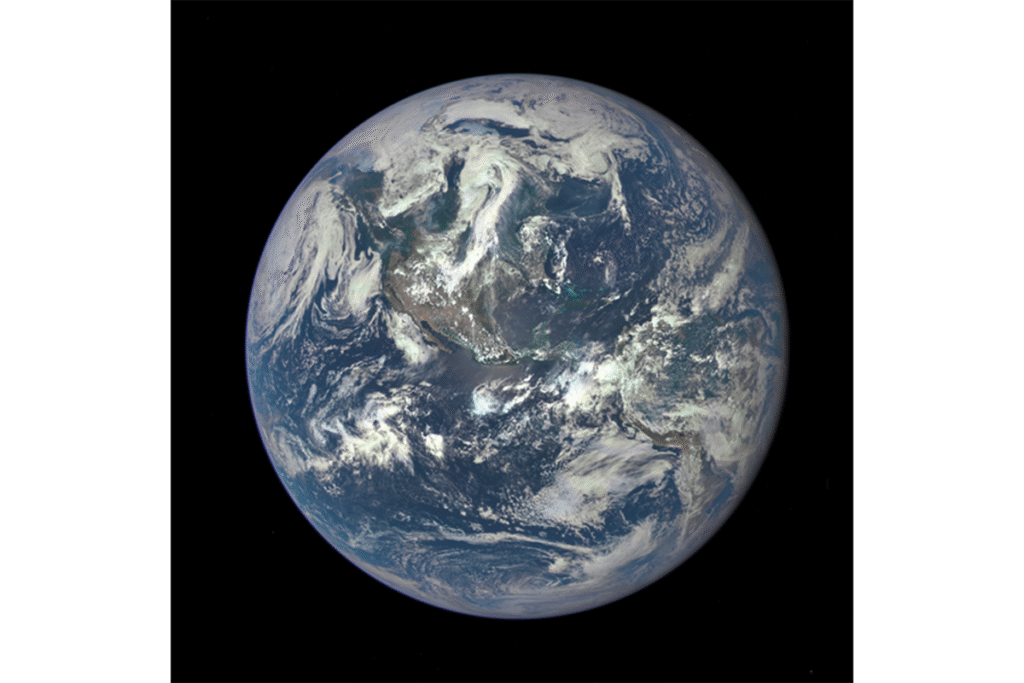
Running a simulation of this size and detail required an immense amount of computational power. The researchers had to use two of the most powerful supercomputers in Europe to get the job done. They used 8,192 GPUs on the Alps system in Switzerland and another 20,480 GPUs on the JUPITER system in Germany. Both of these supercomputers are equipped with Nvidia’s new GH200 Grace Hopper superchips. These advanced chips combine GPU and CPU capabilities, which allows them to handle different parts of the complex model at the same time.
The team was able to achieve a time compression of nearly 146 simulated days for each real day of computing. The model had to calculate almost 1 trillion different values, a number known as degrees of freedom. This performance is a significant improvement over previous simulations that only modeled the atmosphere at a similar resolution. This new, more complete model will allow scientists to conduct long-term studies of how different parts of the Earth’s systems interact with each other.
Breaking Through Old Resolution Limits
The true innovation of this project is its ability to combine both “fast” and “slow” Earth system processes at such a high resolution. Fast systems are things like the energy and water cycles that control our daily weather. These systems need to be updated every few minutes in the model as storms and weather fronts move across the grid cells. Slow processes, on the other hand, include things like the carbon cycle, changes in the biosphere, and the chemistry of the oceans. These processes change over much longer periods, such as years or even decades.
Previously, models that tried to include all of these complex systems could only be run at a much lower resolution, typically over 40 kilometers. The breakthrough was made possible by advanced software engineering. The team used a new framework called Data-Centric Parallel Programming to modernize the decades-old Fortran code that these models are based on.
This groundbreaking work has earned the research team a nomination for the prestigious Gordon Bell Prize for Climate Modelling. The winner of the award is set to be announced at the Supercomputing Conference on November 18. This digital twin of Earth will provide scientists with a powerful new tool to understand our planet’s climate and predict future changes with greater accuracy than ever before.