One month after a ceasefire was supposed to bring relief to Gaza, Palestinian families are still living in desperate conditions. Widespread power outages, severe restrictions on aid, and ongoing violence have crushed hopes that the fragile truce would improve life in the devastated territory.
The daily struggle is immense. Hanan al-Joujou, a 31-year-old mother in a displacement camp, has to feed her three children in complete darkness, using only a small flashlight. She told Reuters that she cannot afford to charge it regularly. “We stay in the darkness once the sun sets,” she said. If the flashlight’s battery runs out, her family often has to skip dinner.
Gaza’s electricity infrastructure has been almost completely destroyed. The territory has received no power for over two years, and the recent war has damaged more than 80% of its distribution networks. The Gaza Electricity Distribution Company reports that the cost of the damage is around $728 million. Before the conflict, Gaza’s sole power plant shut down, and the 120 megawatts it used to receive from Israel were cut off.
Ceasefire Violations Continue to Rise
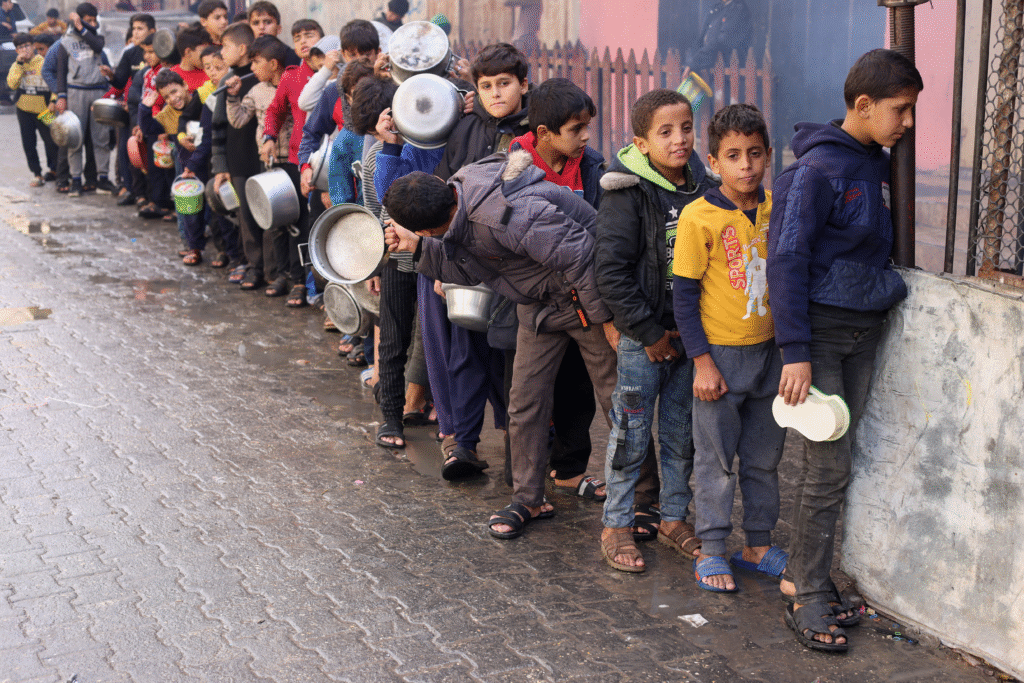
The ceasefire, which officially started on October 10, 2025, has been broken hundreds of times. According to Gaza’s Government Media Office, there were 282 violations between October 10 and November 10. These incidents included 88 cases of Israeli forces shooting at civilians, 124 bombardments, and the demolition of 52 properties. Since the truce began, at least 242 Palestinians have been killed and another 622 have been injured.
The terms of the ceasefire required Israel to permit 600 aid trucks to enter Gaza every day. However, the actual number of deliveries has been much lower. In the middle of October, Israel cut the number of allowed trucks in half to 300 per day, claiming that Hamas had violated the agreement. Humanitarian groups report that less than half of the required trucks are making it into Gaza. On top of that, Israel has rejected over 100 requests for aid to be delivered.
Widespread Destruction and Displacement
The humanitarian crisis is staggering. Since the ceasefire began, nearly 688,000 people have moved across Gaza, with the vast majority traveling from the south to the north. Many are returning to their hometowns only to find that their houses have been destroyed. Across the territory, more than 80% of all buildings have been damaged. According to Gaza’s Health Ministry, the war has killed at least 69,169 Palestinians since it began on October 7, 2023.
The basic infrastructure needed for daily life has collapsed. About 70% of the water and sanitation facilities have been destroyed or damaged. This has led to a severe health crisis, as contaminated water now poses a major risk to the population. Families are living in makeshift shelters without access to running water or electricity.
Medical organizations are sounding the alarm. Doctors Without Borders has warned that the terrible living conditions, which include overflowing sewage and severe overcrowding in camps, are causing a surge in respiratory infections, scabies, and diarrhea. Caroline Seguin, an emergency coordinator for the group, described the situation as desperate. “One month into this fragile ceasefire,” she said, “Palestinians continue to face tremendous hardship.” The hope that the truce would bring an end to the suffering has not become a reality for the people of Gaza.