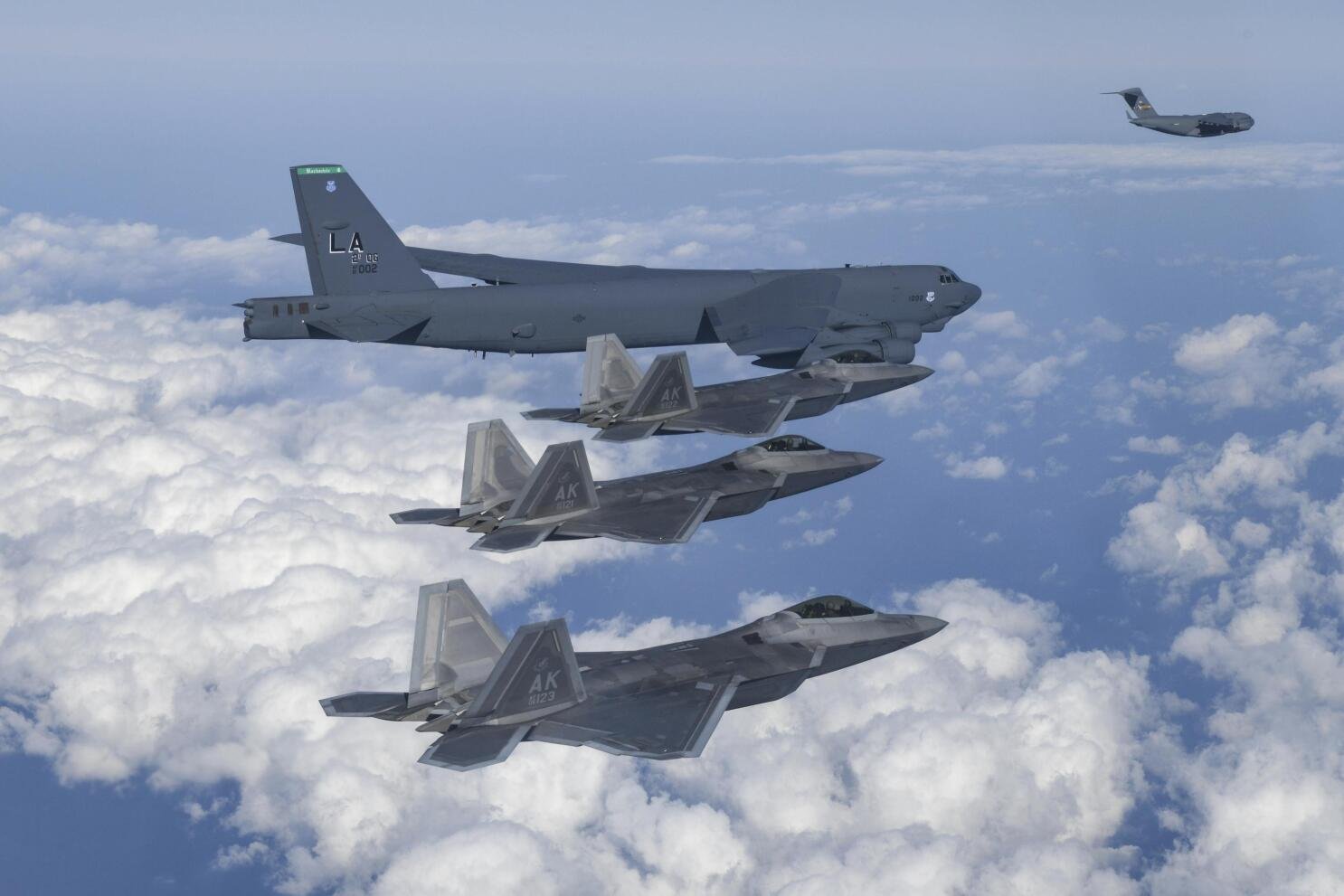
Nuclear-Capable Bombers Arrive at Morón Air Base
The United States has deployed B-52 Stratofortress bombers to Morón Air Base in Spain, signaling a show of strength amid rising nuclear tensions between Washington and Moscow. The move marks one of the most significant bomber deployments in Europe since the end of the Cold War.
The arrival of the nuclear-capable aircraft on Friday forms part of Bomber Task Force Europe 26-1, a U.S. Air Force initiative designed to enhance NATO coordination and deterrence along the continent’s eastern borders.
According to U.S. Air Forces in Europe (USAFE), the B-52s, which took off from Barksdale Air Force Base in Louisiana, will participate in joint exercises with Finland, Lithuania, and Sweden to strengthen defense cooperation and demonstrate allied readiness.
Deployment Follows Escalating Nuclear Rhetoric
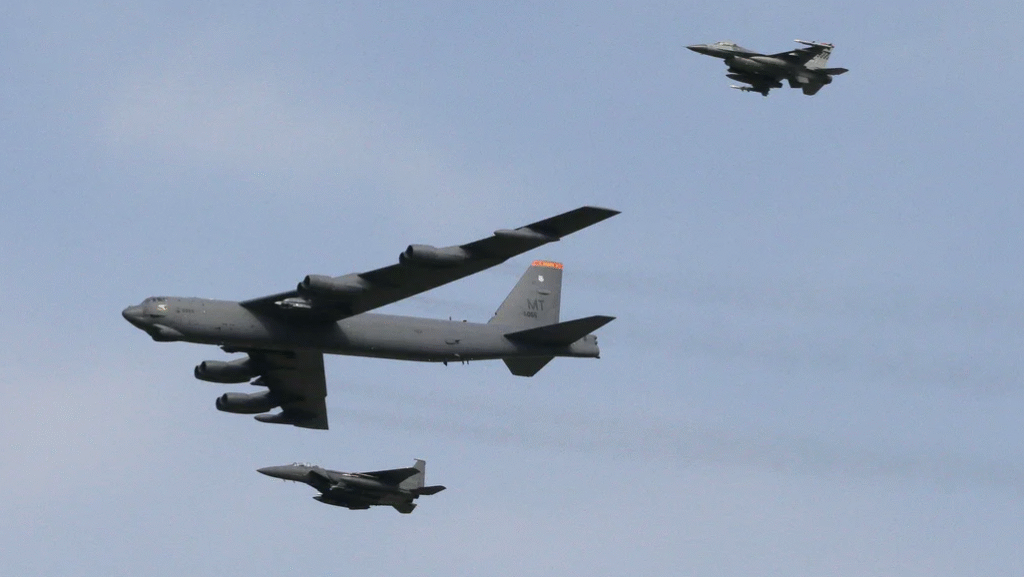
The bomber deployment came just hours after Russian Foreign Minister Sergei Lavrov confirmed that Moscow was working on proposals for potential nuclear tests, following directives from President Vladimir Putin.
Lavrov stated that Russia’s preparations were “actively under way” in response to former U.S. President Donald Trump’s recent order for Washington to resume its own nuclear testing program.
The development has fueled fears of a renewed nuclear arms race, threatening to dismantle decades of restraint under the Comprehensive Nuclear-Test-Ban Treaty (CTBT), which both nations have observed since the early 1990s.
Trump’s Announcement Sparks Global Alarm
Tensions began to escalate on October 30, when Trump announced on Truth Social that he had “instructed the Department of War to restart nuclear testing” to ensure parity with other powers.
Trump claimed, without presenting evidence, that both Russia and China had been conducting secret underground tests in violation of international agreements.
On November 5, Putin responded during a televised Russian Security Council session, ordering his defense officials to draw up formal plans for testing if the United States moves forward with its program.
“Russia will take appropriate and proportional measures,” Putin warned, underscoring the Kremlin’s readiness to match any U.S. nuclear escalation.
Foreign Minister Lavrov later told Russian state media that the directive “has been acknowledged and is under implementation,” suggesting Moscow may soon outline specific test parameters.
Russia’s last nuclear test occurred in 1990, while the United States conducted its final detonation in 1992 at the Nevada Test Site.
NATO Reassures Allies of Nuclear Deterrence
In response to the growing anxiety across Europe, NATO Secretary General Mark Rutte urged calm, emphasizing that “a nuclear war can never be won and must never be fought.”
Speaking to Germany’s Welt am Sonntag, Rutte said NATO’s latest annual nuclear readiness drill reaffirmed the alliance’s strategic credibility and deterrent strength.
“When Russia engages in dangerous and reckless nuclear rhetoric, our citizens should remain confident in NATO’s capacity to respond,” Rutte added, assuring member states of continued vigilance across Europe’s eastern flank.
Washington Clarifies Nuclear Testing Plans
Amid mounting global concern, U.S. Energy Secretary Chris Wright sought to clarify Trump’s remarks, explaining that any future testing would involve “subcritical explosions”, simulations that stop short of full nuclear detonations.
“These experiments are designed to maintain the reliability of America’s nuclear arsenal without violating the CTBT,” Wright said during a briefing.
However, Trump appeared to contradict those assurances in an interview with CBS’s 60 Minutes, declaring that the United States would “test nuclear weapons like other countries do,” reigniting speculation about the administration’s intentions.
Strategic Message to Russia and NATO Partners
Analysts believe the B-52 deployment sends a dual message: deterrence to Moscow and reassurance to NATO allies unsettled by rising nuclear brinkmanship.
Defense experts note that the B-52s’ presence in southern Europe enables rapid response capability across Eastern Europe, the Mediterranean, and the North Atlantic, regions increasingly central to NATO’s defense posture.
Military analysts also point out that the joint drills with Nordic partners, including recently inducted NATO member Finland and soon-to-be member Sweden, highlight the alliance’s growing integration and readiness in the face of evolving Russian threats.
Global Calls for Restraint and Renewed Diplomacy
The renewed nuclear tension has prompted international appeals for restraint. United Nations officials have warned that a breakdown of the nuclear test moratorium would be a “historic setback” for global nonproliferation efforts.
Experts from the Arms Control Association cautioned that any U.S. or Russian testing could “trigger a chain reaction” encouraging other nuclear-armed nations to resume their own programs.
European leaders have also urged Washington and Moscow to return to dialogue and reaffirm commitments under the CTBT and New START treaties.
Diplomatic observers fear that the current escalation, if unchecked, could undo decades of progress toward nuclear arms control and strategic stability.
Strategic Uncertainty Ahead
While Pentagon officials have not disclosed how long the B-52s will remain stationed in Spain, defense insiders suggest the deployment could extend into early 2026 as part of a rotating deterrence mission.
With tensions mounting between the world’s two largest nuclear powers, the coming months may determine whether deterrence and diplomacy prevail, or whether the world faces a return to an era of open nuclear competition.